
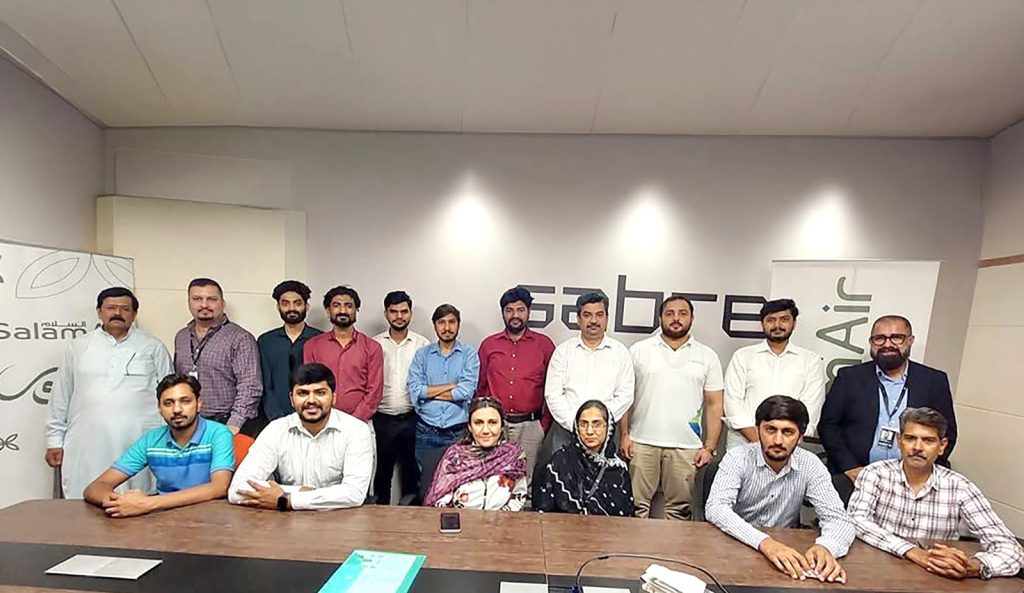
Sabre and SalamAir held a joint workshop at Sabre’s Lahore office, bringing together travel trade professionals for sessions on product updates, fare rules, and hands-on booking workflow demonstrations. The sessions were led by Amber Ali Shuja and Sadia.
Why the Timing Matters
This workshop lands at a relevant moment in SalamAir’s distribution strategy. The Oman-based low-cost carrier activated its fares on Sabre GDS in key BSP markets including Saudi Arabia, UAE, Qatar, and Turkey, with Pakistan named as one of the markets set to follow in subsequent phases of the rollout. A hands-on training session in Lahore fits that pattern — once a market goes live on a GDS, airlines typically follow up with local agent training to make sure the trade actually knows how to use the new booking access, rather than leaving agents to figure out fare rules and workflows on their own.
What This Means for Agents
For Pakistani agencies, direct GDS access to SalamAir means the ability to book and ticket the airline through Sabre rather than relying solely on direct channels — a meaningful shift for agencies that build itineraries incorporating Gulf stopovers or connections through Muscat. Sessions covering fare rules specifically are typically where agents pick up the practical details — fare basis codes, restrictions, mixing SalamAir segments with other carriers — that don’t come through in a general product briefing.
Broader Context
SalamAir has been actively expanding its GDS footprint beyond Sabre as well, having also activated on Abacus GDS to strengthen its reach across Asian markets, with Pakistan named among the markets in that phased rollout too — suggesting the airline is treating GDS distribution as a multi-platform push rather than a single-system rollout, and Pakistan is a consistent target market across both.